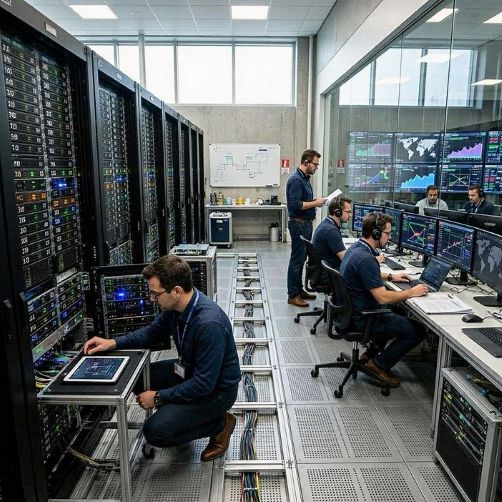

How Agentic AI Is Reshaping IT Hiring Without Replacing Human Talent
 Agentic AI systems are becoming more capable of completing multi-step tasks with limited human guidance, changing how organizations approach software development and IT operations. Research from McKinsey & Company and Gartner shows that artificial intelligence is increasingly supporting coding, customer support, system monitoring, and workflow automation. Rather than eliminating entire professions, these technologies are shifting routine responsibilities away from people and creating greater demand for higher-value technical and problem-solving skills.
This shift is influencing AI-powered IT careers as employers rethink the skills they prioritize during recruitment. Reports from LinkedIn and the World Economic Forum indicate that organizations increasingly value adaptability, collaboration, AI literacy, and critical thinking alongside technical expertise. While automated agents can generate code, summarize documentation, or troubleshoot common issues, experienced professionals remain responsible for architecture, security, quality assurance, and business decision-making.
The Challenge of Routine Task Automation
Many IT departments have traditionally relied on employees to perform repetitive work such as writing boilerplate code, responding to common support requests, testing standard software functions, and maintaining documentation. Findings from GitHub suggest that AI-assisted development tools can help developers complete some coding tasks faster, allowing teams to focus more attention on complex engineering challenges.
This efficiency creates understandable concerns about job security. However, experts note that automation has historically changed the nature of technology roles rather than removing the need for skilled professionals. Human judgment remains essential when projects require creativity, ethical decision-making, customer communication, or strategic planning.
Skills Employers Increasingly Seek
Hiring managers are expanding their expectations beyond programming languages alone. Data from the World Economic Forum’s Future of Jobs Report highlights growing demand for analytical thinking, resilience, lifelong learning, and technology literacy.
- Understanding how AI tools support development workflows.
- Evaluating AI-generated output for accuracy and security.
- Designing systems that combine automation with human oversight.
- Communicating technical ideas to business stakeholders.
- Strengthening cybersecurity and data governance practices.
These capabilities help organizations gain the benefits of automation while reducing operational and security risks.
Upskilling Creates New Opportunities
Agentic AI is encouraging many professionals to expand their knowledge rather than compete directly with automation. Studies published by IBM suggest that continuous learning has become one of the most important strategies for maintaining career growth as technology evolves.
Professionals who learn prompt engineering, cloud platforms, cybersecurity, machine learning fundamentals, and AI governance can position themselves for emerging responsibilities. Employers are increasingly investing in internal training because experienced staff already understand business processes, customer needs, and organizational systems.
Preparing for the Next Generation of IT Careers
The future of technology employment will likely depend on how effectively people work alongside intelligent software rather than compete against it. Reports from OECD emphasize that successful workplaces combine digital innovation with strong human skills such as judgment, creativity, and collaboration.
For IT professionals, practical preparation means staying curious, building expertise in modern tools, and continuously improving both technical and interpersonal abilities. Agentic AI will continue transforming hiring and daily work, yet organizations will still rely on talented people to guide strategy, solve difficult problems, and ensure technology serves real business and human needs responsibly.